
7 Reasons Homeowners Are Buying This Rolling Core Aerator Instead of Renting One Every Single Fall
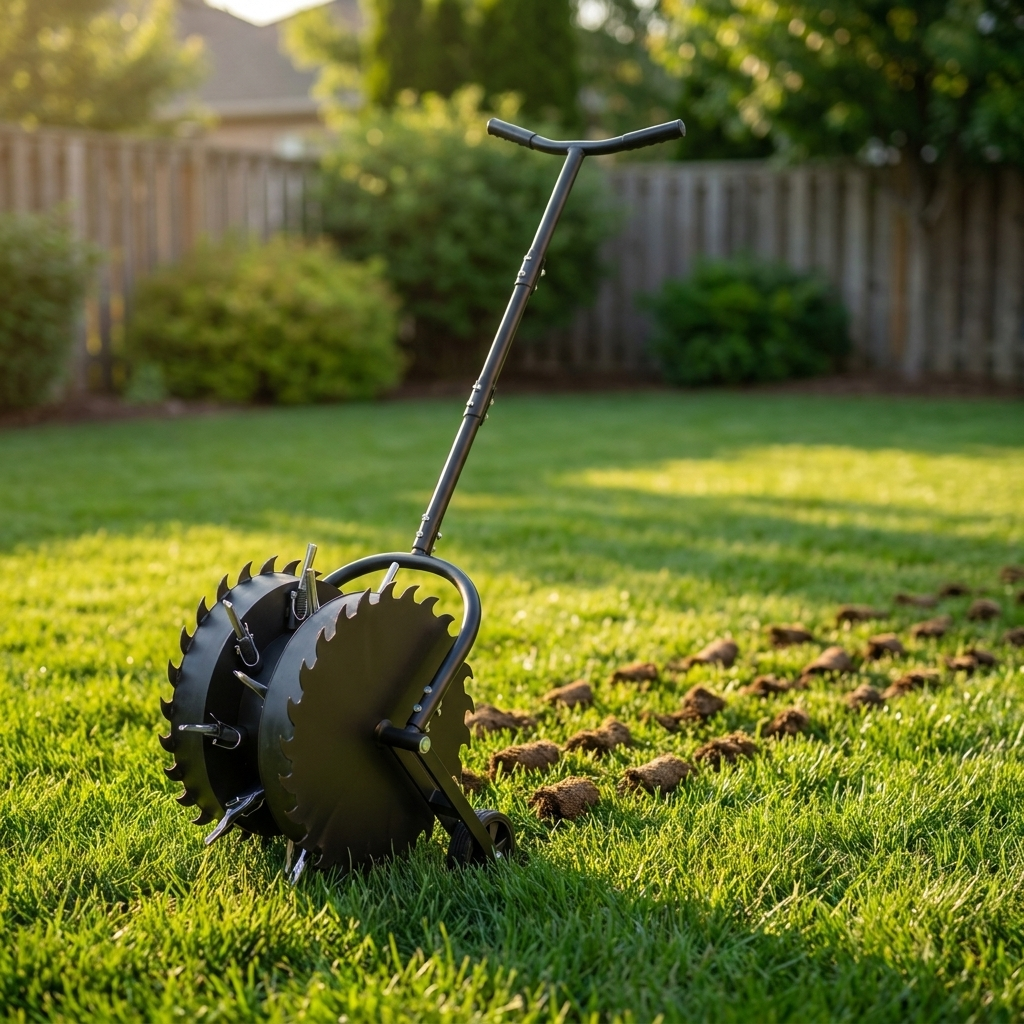
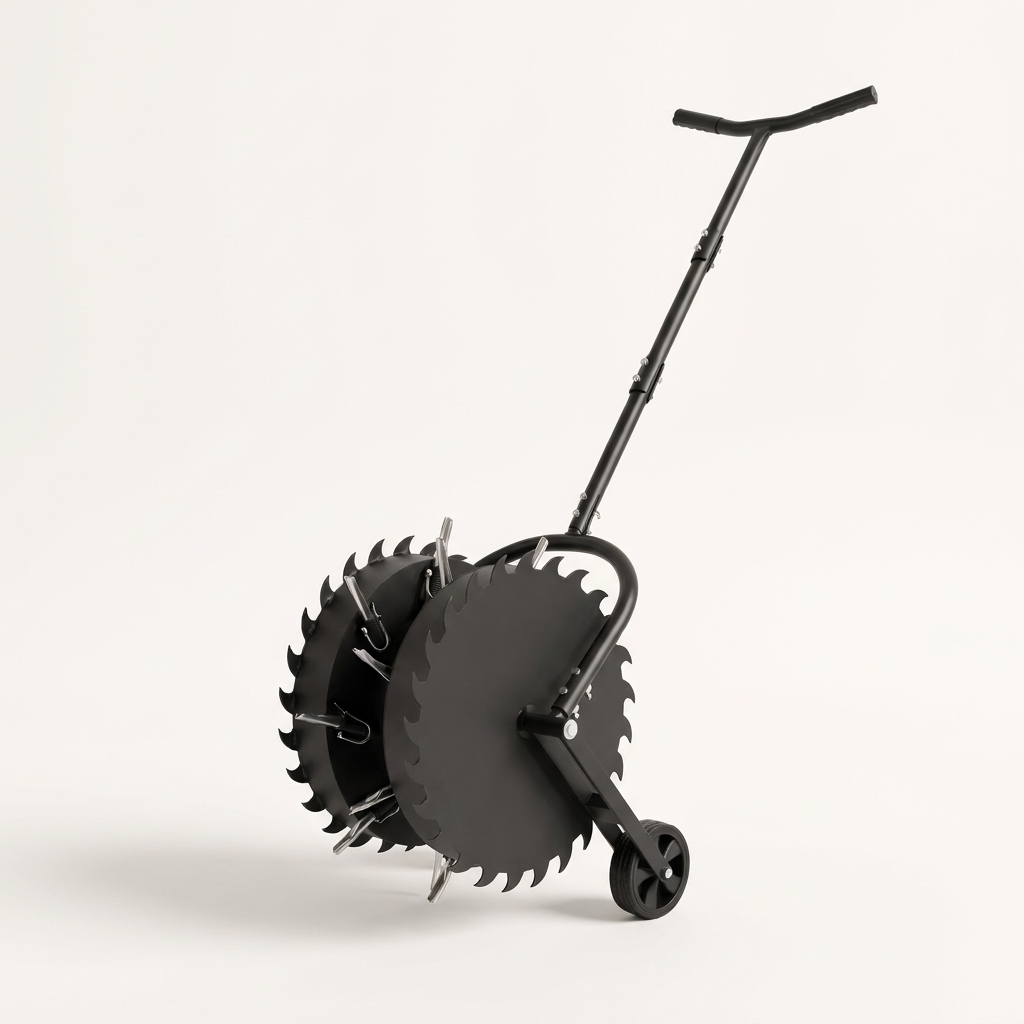
If your lawn goes thin in the same spots every year, puddles after rain and grows moss where grass used to be, the seed isn’t the problem and neither is the fertilizer. The soil underneath is packed too tight for either one to reach the roots. The fix is core aeration — pulling plugs of soil out of the ground so air and water can get down there. Most people rent a gas machine for a Saturday, or pay a lawn service $100–$200 to do it, and then repeat that every single season forever. TurfCore is the other option: a 46 lb weighted steel roller with 16 hollow anti-clog tines that pulls real 2-inch cores, lives in your garage, and costs nothing to use after you own it.
1. Spike Aerators Push. This One Pulls.
The spiked shoes and the rolling spike drum at the hardware store don’t remove anything. They shove a solid point into the ground, which compresses the soil sideways — so the wall of every hole ends up tighter than it was before.
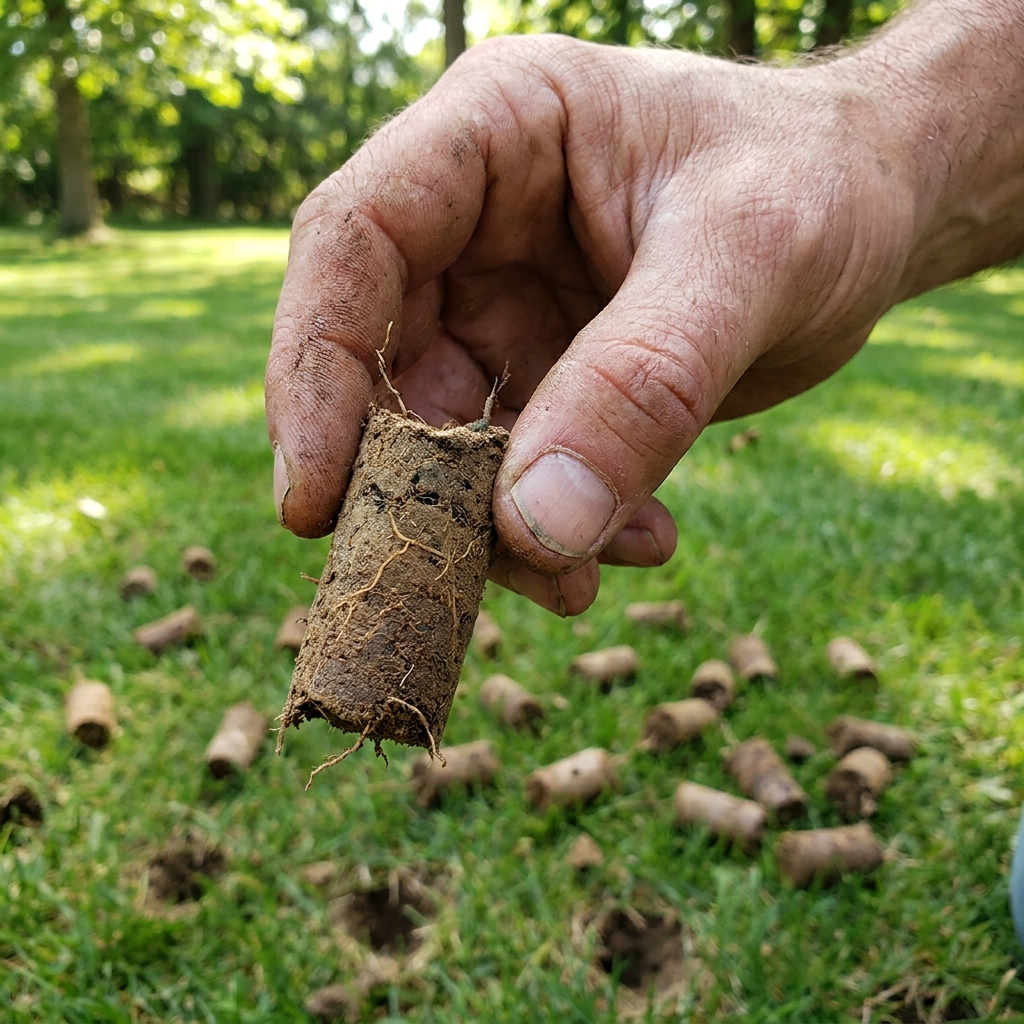
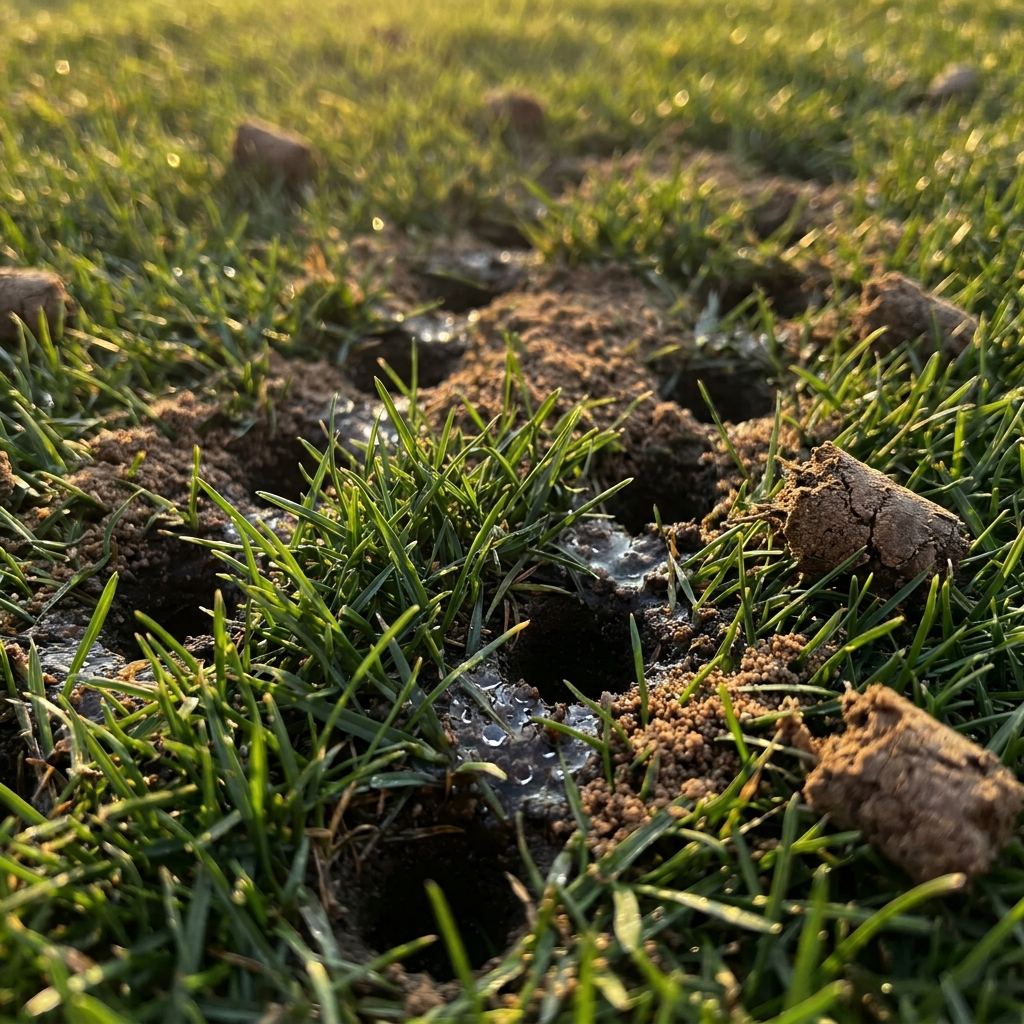
TurfCore’s 16 tines are hollow. Each one sinks in, fills with soil, and lifts a 2-inch core out of the ground entirely. That leaves an open channel for water, air and fertilizer to actually reach the root zone instead of running off the top. It’s the same thing the $3,000 gas machines do, and the reason lawn services charge for it.
2. The Tines Fling the Core Out. That’s the Whole Trick.
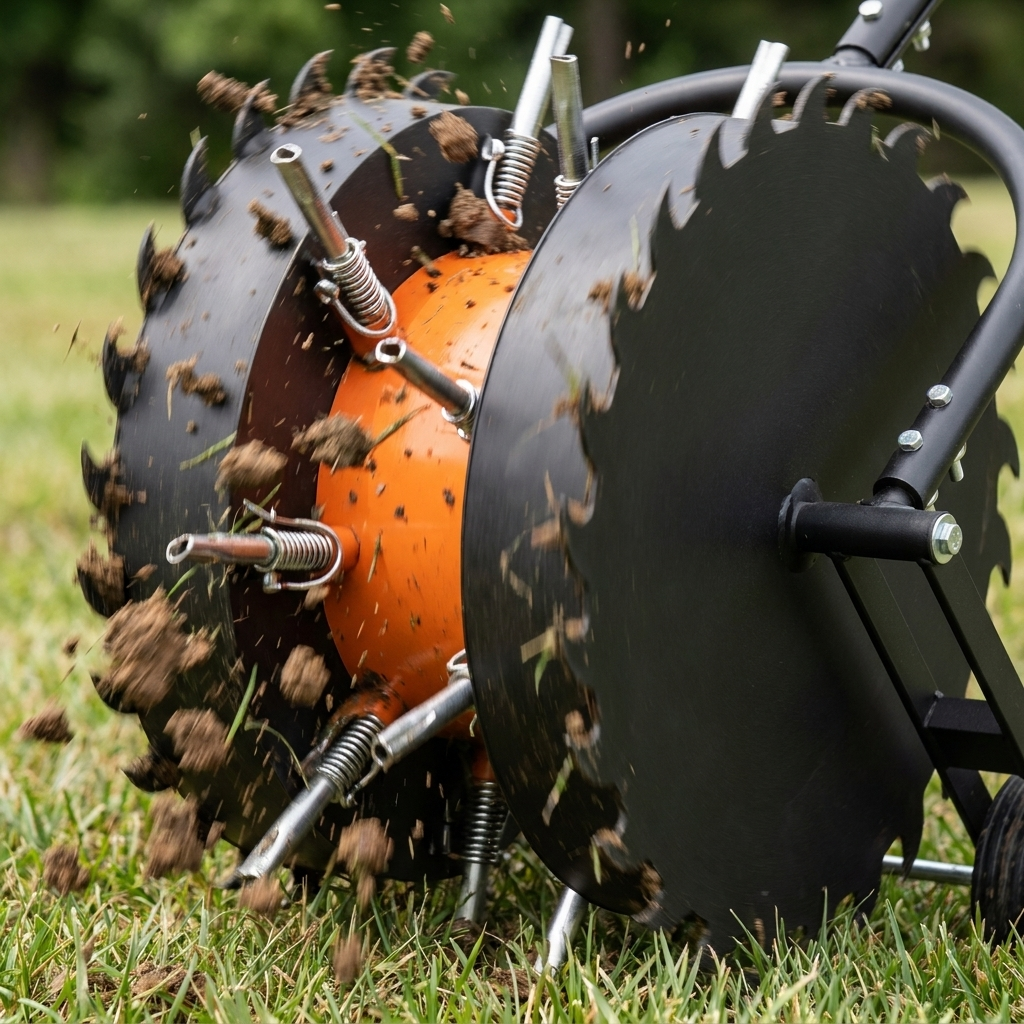
Every cheap coring tool fails the same way: the first ten holes are great, then the tines pack solid with dirt and you spend the rest of the afternoon poking them clear with a screwdriver. A clogged tine doesn’t core — it just compacts.
TurfCore’s tines are spring-loaded and pivoted, so they enter and leave the soil at close to a right angle and then snap the core out against the back guard. You can hear it working — a steady ping as plugs hit the plate and drop on the grass behind you. That pivot is also why the holes stay round instead of tearing into ovals.
3. It Pays for Itself in Two or Three Uses
Run the numbers on what you’re doing now. A day’s rental on a gas core aerator is roughly $100–$160, plus a truck to haul it and a return window you’re racing. A lawn service is $100–$200 a visit. Spring and fall, every year, forever.
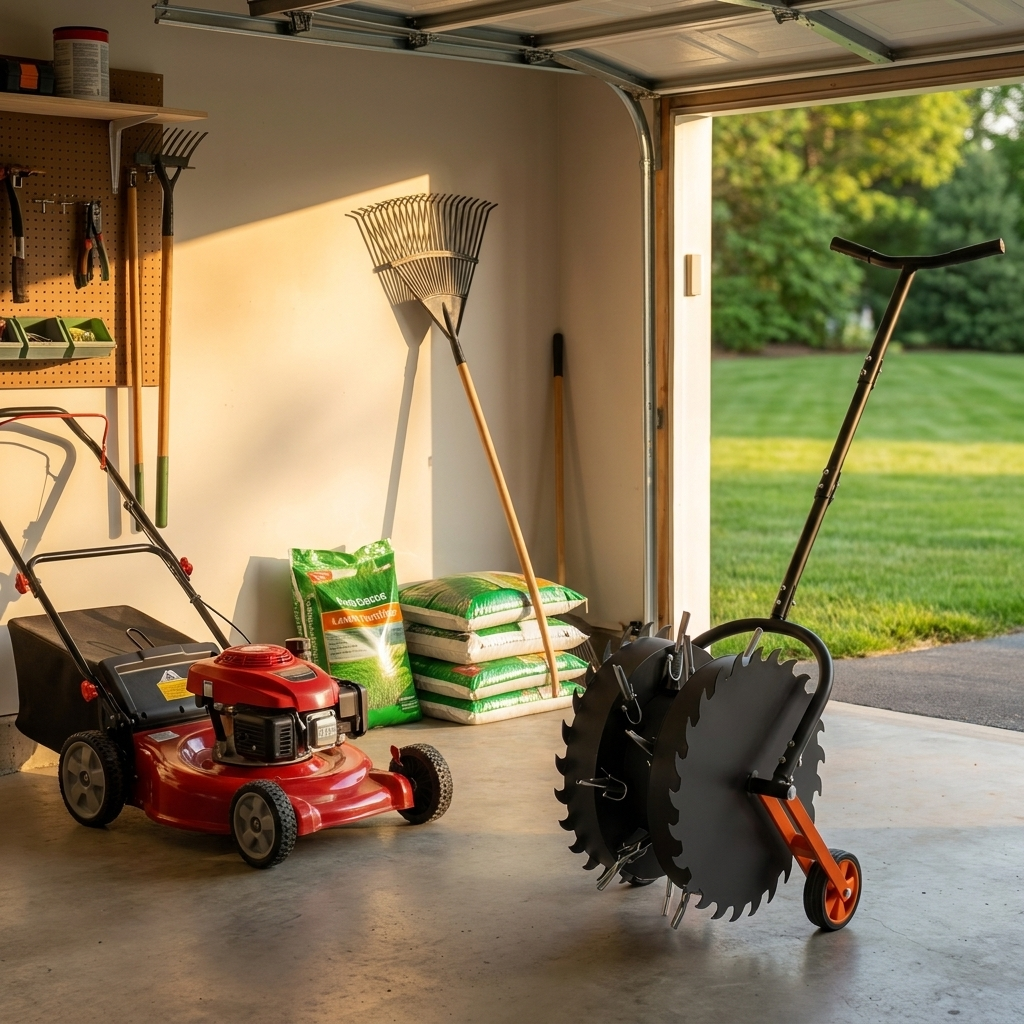
TurfCore is one payment and then it’s yours. Aerate twice a year for two years and you’ve spent less than four rentals. After that it’s free — and it’s sitting in your garage the weekend the soil is finally right, instead of booked out three days.
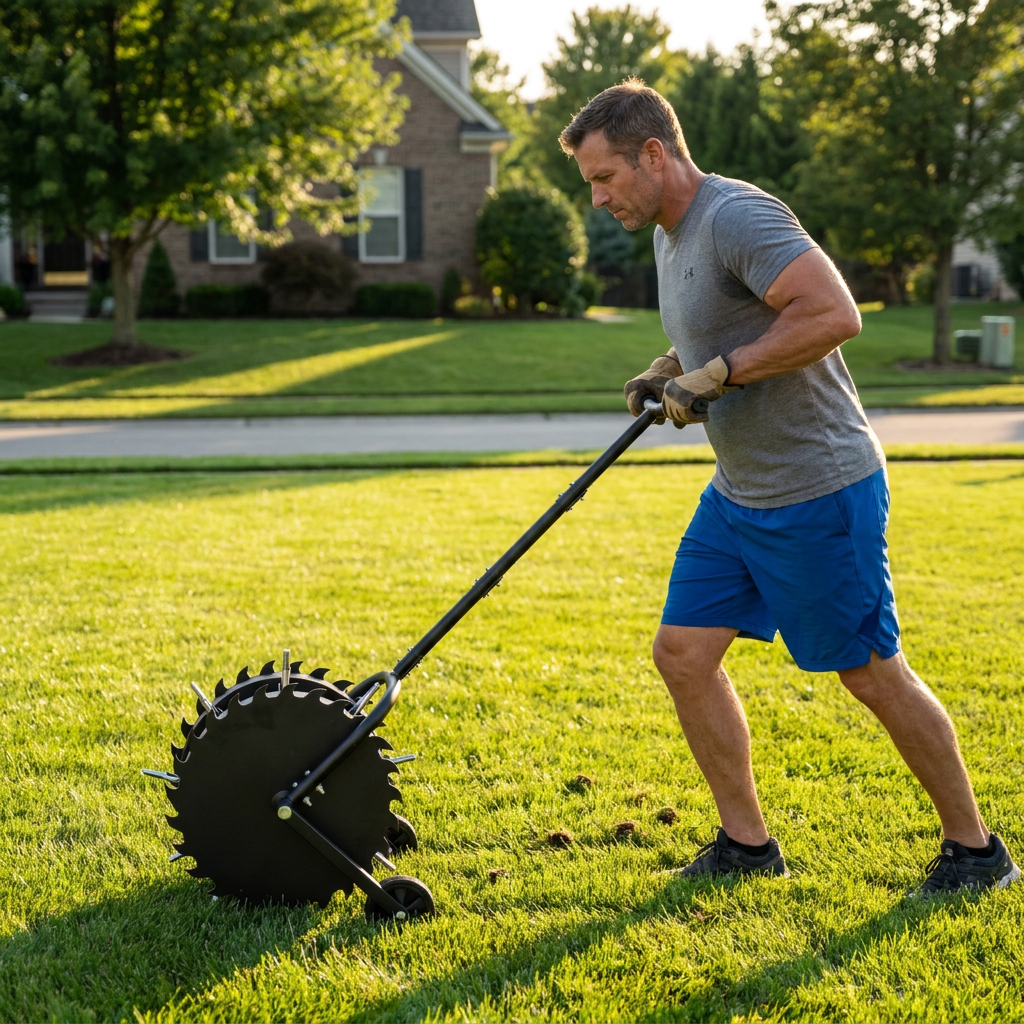
4. Aerate on Your Schedule, Not a Return Window
Core aeration only works properly when the soil is damp. That means the right day is the one after it rains — which is never the day your rental reservation happens to fall on.
Owning it changes the whole job. Front yard Saturday morning, back yard Sunday evening, corners next week. No clock, no deposit, no gas, no noise complaint at 7pm. And no dedicating a full precious weekend day to pickup, use and return.
5. You Set the Weight. That’s How You Control Depth.
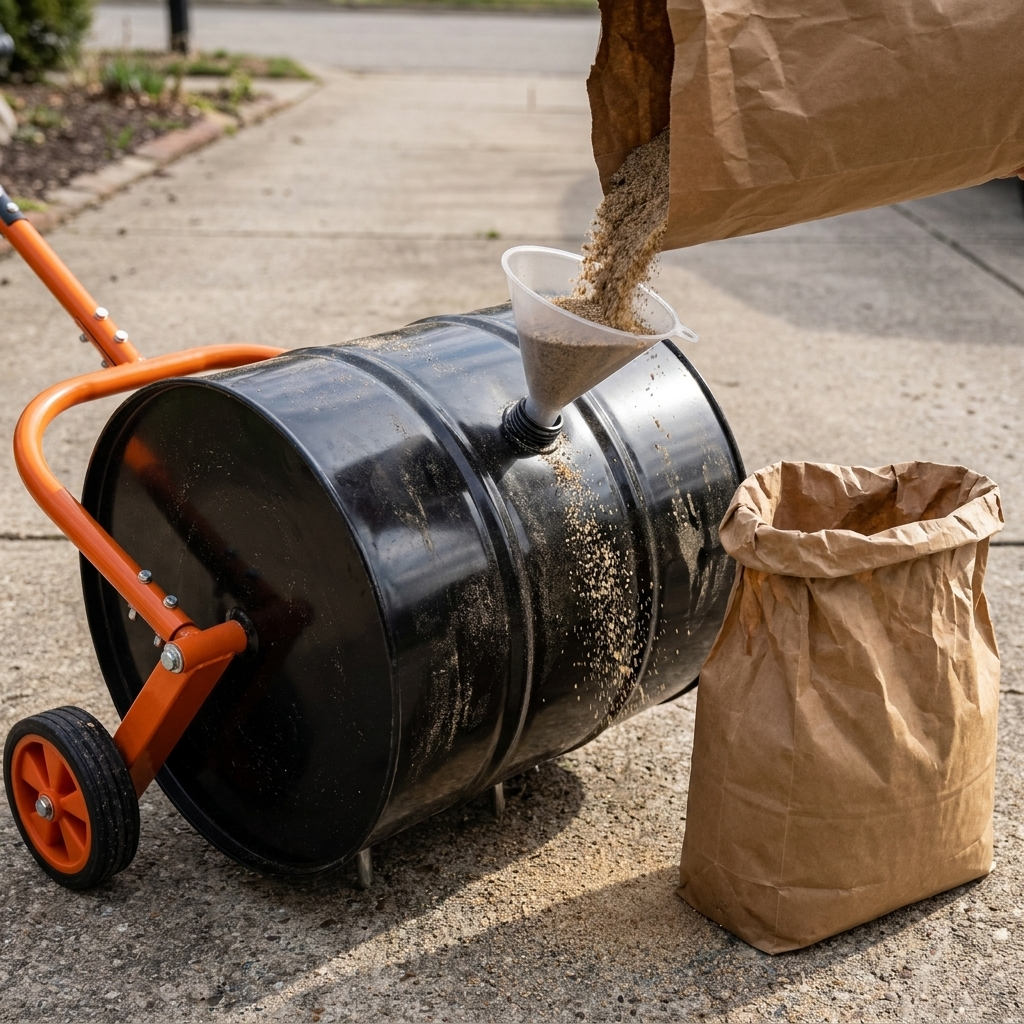
Depth on a manual aerator is a weight problem, and TurfCore hands you the dial. The steel side drums hold up to 46 lbs of sand — you decide how much goes in.
Hard clay in Texas or the Carolinas? Fill them and let the mass do the work. Soft loam, or a recently watered lawn? Run it half full or empty and it still pulls plugs, while staying far easier to push and turn. Sand is a $6 bag from any big-box store, and you fill it once.
6. The Transport Wheel — the Part Earlier Versions Didn’t Have
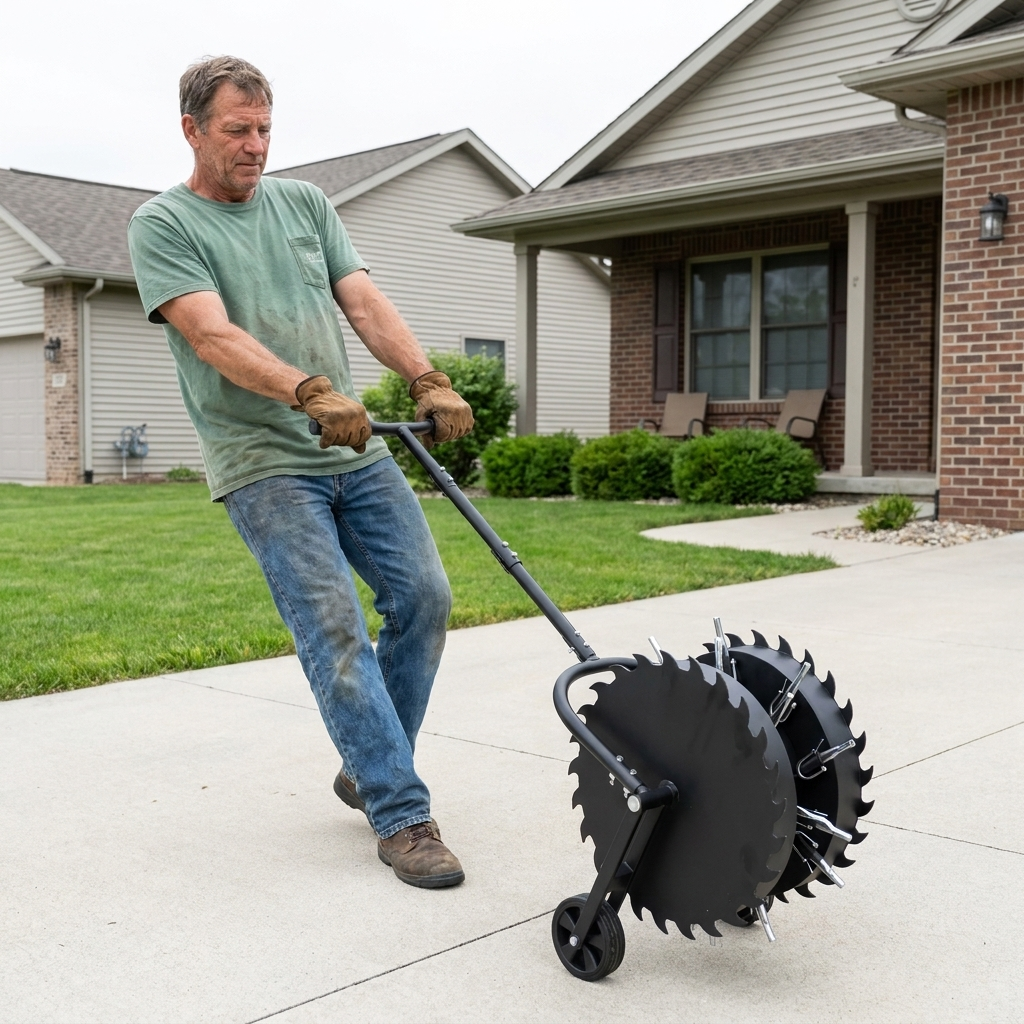
This is the detail that separates the current unit from the ones people complained about. On the old design, getting a loaded aerator from the front yard to the back meant carrying it, or dragging steel tines across your concrete.
TurfCore tips back onto a transport wheel and pulls in reverse, tines held clear of the ground. Driveway doesn’t get scratched, tines don’t get dulled, and you don’t need your son or your neighbour to help you lift 70 lbs of loaded steel.
7. How It Works in 3 Simple Steps
This is the single biggest thing that separates a great result from a disappointing one. Damp soil lets the tines sink; bone-dry, compacted ground makes any aerator skip. A deep soak the night before, or aerating a day after rain, is all it takes.
Fill the drums with dry sand through the fill ports — use a funnel, and start around half. Add more if you’re not pulling full-length plugs. Hard clay wants weight; soft ground often needs none at all.
Keep a steady pace — momentum drives the tines. Do concentric laps rather than tight back-and-forth turns, then fill in corners at the end. Leave the plugs on the lawn; they break down in a week or two and feed the soil back.
TURFCORE VS. THE THREE OTHER OPTIONS
You have four ways to aerate a lawn. Here’s what each one actually costs you.
| TurfCore | Rent a gas aerator | Spike roller / shoes | |
|---|---|---|---|
| What it does to soil | Removes 2″ cores | Removes cores | Compacts it further |
| Cost per season | $0 after you own it | $100–$160 + truck | Low |
| When you can use it | Any day the soil is damp | Whenever it’s available | Anytime |
| Time pressure | None — it’s yours | Return window, by the hour | None |
| Noise / fuel | Silent, no gas | Loud two-stroke | Silent |
| Clogging | Spring tines eject cores | Common on rentals | — |
| Getting it to the back yard | Tip onto transport wheel | Two people and a ramp | Easy |
| Five years from now | Still in your garage | $800+ spent, own nothing | Lawn no better |
What you get
- 16 hollow anti-clog tines — spring-loaded, replaceable
- Pulls cores up to 2 inches deep
- Weighted steel drums — hold up to 46 lbs of sand
- Sawtooth steel discs for light verticutting as you roll
- Transport wheel — tines never touch concrete
- Reinforced dual push rod and long handle
Read this before you buy
- It is a workout.
- This is a manual tool with real weight behind it, and that weight is the entire reason it pulls plugs a spike roller can’t. Expect something close to pushing a non-self-propelled mower. Owners in their sixties and seventies use it routinely — but they take breaks, and they don’t fill the drums to the brim on day one. If you want zero effort, rent the gas machine.
- Dry soil is the number one reason people are disappointed.
- Almost every “it didn’t pull plugs” complaint traces back to bone-dry, baked ground. No aerator on earth cores dry clay well. Soak the lawn deeply the day before, or go out the day after rain, and the difference is night and day.
- Filling the drums with sand takes patience.
- The fill port is small. Use dry sand (not play sand, and not straight from a rained-on pallet), tip the unit at an angle, and use a funnel with a narrow spout. Budget fifteen minutes. You only do it once — but do it in the driveway, not the lawn.
What owners say
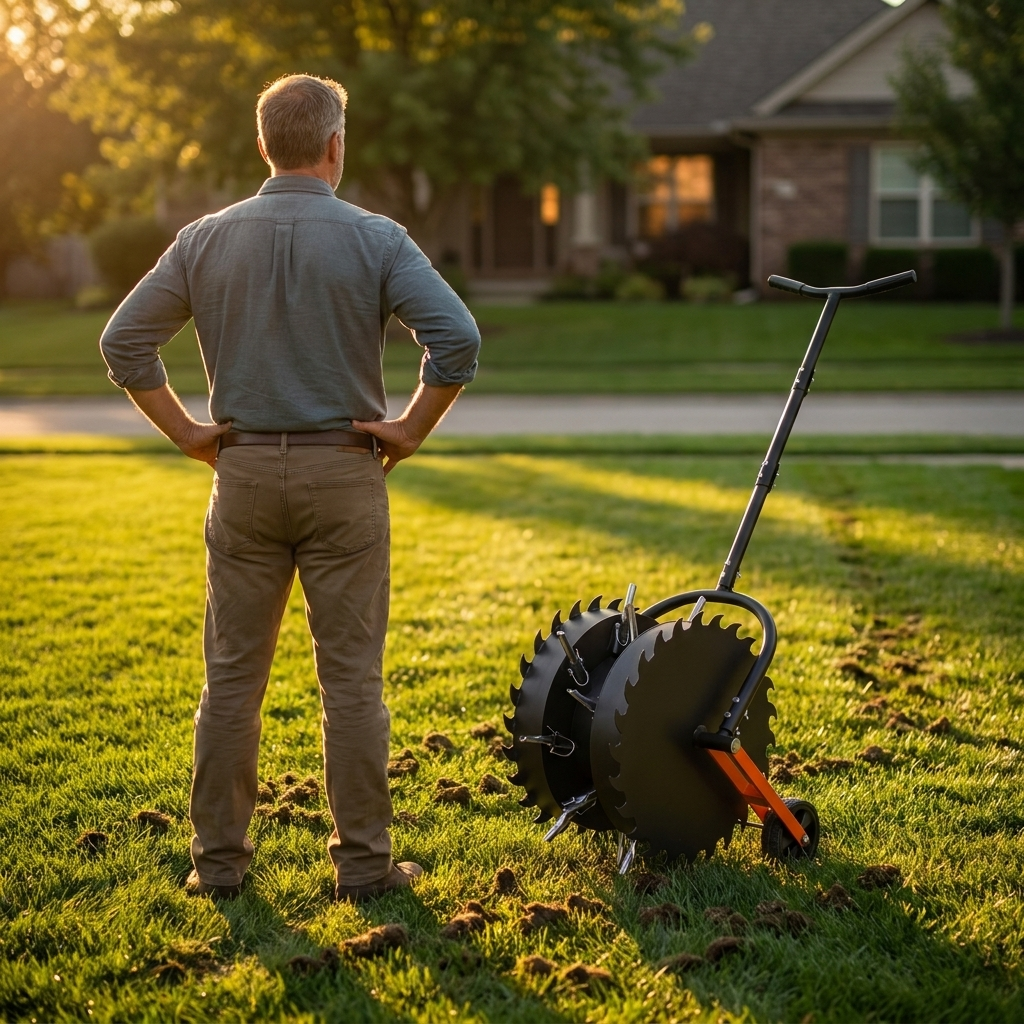
You’re going to aerate this lawn every year for the next ten years. The only question is who you keep paying to do it.
Soak the lawn Friday. Pull plugs Saturday. Do it again in spring, and every season after that, for free. $179.95 with free U.S. shipping and 30 days to change your mind.
Get TurfCore — Save $180 →